
A supplier invoice is the supplier's version of what happened. Your delivery is what actually arrived. The job is to put the two side by side before the invoice goes anywhere, so short deliveries and price creep are caught in the week they happen, not at the end of the month when the total looks wrong.
This habit is also the easiest one to keep when the team is busy. It takes minutes each week, rather than an afternoon at month end trying to remember what came in.
Why match the invoice to the delivery?
Start with the delivery, not the invoice. When the carton is in front of you, count what came off the truck and note anything damaged or missing. Then compare that with each line on the invoice. A line billed for a full case that arrived short is only fixed if someone notices it that week.
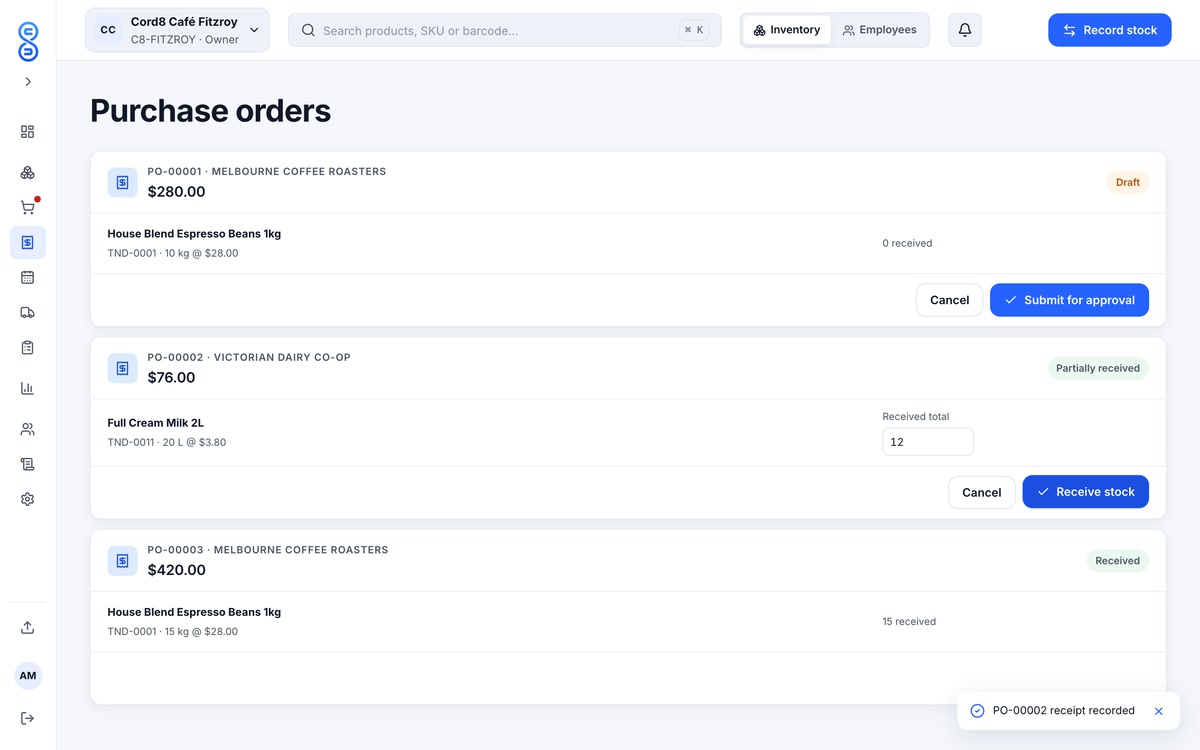
Do this at the back door or the bench where the delivery lands, not later from the invoice on your desk. Memory of a delivery fades within a day, and a carton that has already been put away is much harder to check.
If the delivery arrives when nobody is there, such as a drop-off after close, note the time, the driver and what was left, then check it first thing. A note made at the door is worth more than a clean record made a day later.
How do you record short deliveries?
Record a short delivery on the day, with the product, the quantity you received and the quantity you expected. Partial deliveries are normal, so the order does not need to be closed in one go. Receive what came now and the rest when it arrives.
If your supplier uses delivery dockets, note the short items on the docket as well. Then the invoice, the docket and your stock record all say the same thing.
Write down the reason too, if the driver gave one, such as the supplier being out of stock or a damaged carton. Reasons like these come back, and you want them written down on the day rather than reconstructed when you are chasing a credit.
How do you catch price changes?
Suppliers change prices quietly. A new line appears on the invoice, a product comes in a different pack size, or an item moves up a tier. Compare the price per unit on each invoice with the last one you paid, not just the total at the bottom. Small changes to unit prices are the ones that add up over time.
Check the pack size on every line too. The same product in a different pack is a different price per unit, even when the name on the invoice looks the same.
Keep a short list of the ten products you buy most often, and check their unit price each time an invoice arrives. Those are the lines where a small change adds up fastest over a year, so they deserve the first look.
Should you photograph the invoice first?
If the invoice is on paper, take a clear photo of the whole page, with the total and every line readable. Then review the lines against what arrived, and fix anything that does not match before you save. Nothing should be saved on the strength of the read alone.
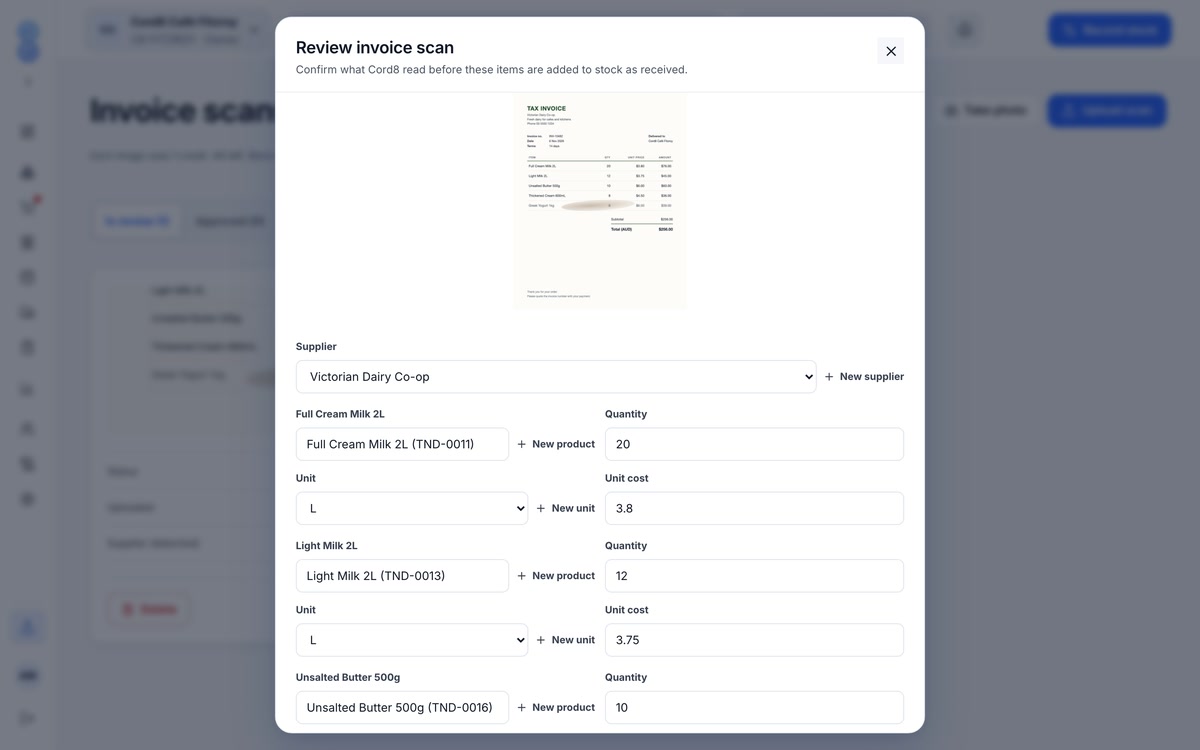
A clear photo makes the review quicker. Lay the invoice flat, use good light, and check the photo before you leave the bench, because a blurred total is hard to read back later.
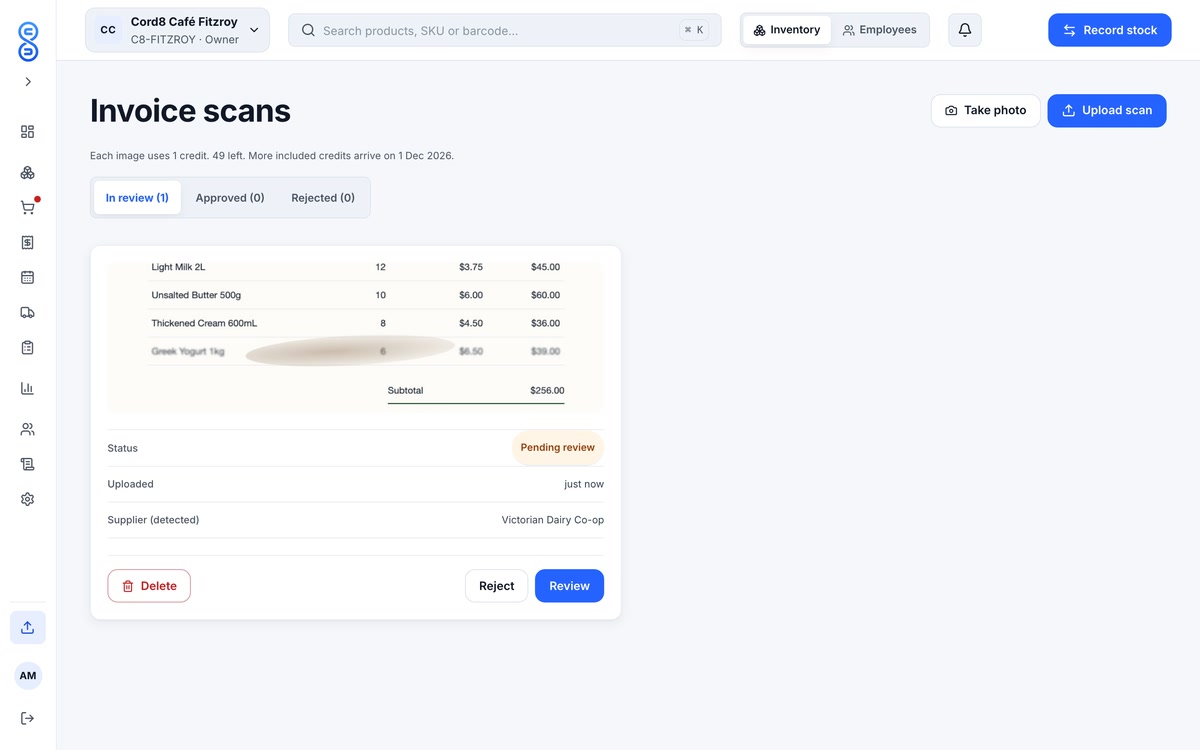
Before you start on a stack of invoices, know what a scan costs.
Keep a paper trail
Keep the invoice, the docket and your notes for each delivery together, in the same folder or the same digital record. When a supplier disputes a short delivery or a price, you want the original docket and the note you wrote on the day, not a recollection from a week later.
Name each file or folder by supplier and delivery date. In a dispute you will search by supplier and week, and a consistent name turns that into a quick job rather than a morning of scrolling.
What do you do when the numbers do not match?
Start with your own records: the delivery docket, the invoice line and the stock count for that product. Many mismatches begin on the receiving side, such as a carton that was signed for but not counted, or a unit that was entered as a case. Fix those first.
If your side checks out, contact the supplier with the invoice number, the line, the quantity you expected and the quantity that arrived. A short, specific message gets a faster answer than a long complaint, and it gives the supplier what they need to issue a corrected invoice or a credit.
Invoice checklist
- Check the delivery before you check the invoice.
- Record short deliveries on the day, with what you expected.
- Compare the price per unit with the last invoice, not just the total.
- Check the pack size on every line.
- Review every scanned line before you save it.
- Keep the docket, the invoice and your notes together.
For how deliveries and orders sit in the stock system, see invoice scanning software for supplier invoices and inventory software for independent shops and venues.
Common questions
Should I check invoices before or after I pay them?
Check them before you pay. Compare each line with the delivery you received, and raise any short delivery or price change with the supplier while the delivery is still fresh in everyone's mind. Waiting until the statement arrives usually means chasing a short delivery that is now several weeks old.
Do I still need the paper invoice if I scan it?
Keep the paper, or the photo, until the delivery is confirmed and any dispute is closed. A scan helps you check the lines. It does not replace the record your supplier sent you.
What if a scanned line is wrong?
Fix it before you save. Change the product, quantity or price so it matches the delivery, then save the lines you have checked.