
Most food waste in a cafe is not dramatic. It is the tray of muffins past its day, the milk opened on Tuesday and binned on Friday, and the soup nobody ordered. You cannot cut what you do not record, so start with a simple log, add a date to every batch, then review the pattern each week.
Waste is money you have already spent on stock. Unlike a price change or a new competitor, it is entirely within your control, which makes it one of the more practical places to start.
What counts as waste?
Waste is anything you bought or made that you cannot sell or use. That includes stock that spoils, product past its date, broken items and food made for service that did not sell. Staff meals and samples count too when they come out of your stock. Agree the list with your team before you start, so everyone logs the same things in the same way.
Keep the list where people prepare food, not in a folder in the office. The items people bin without thinking are the ones most likely to go unlogged: trimmings, sample cups and the last slice at close.
Why does every write-off need a reason?
A bin count tells you how much went out. A reason tells you why, and the why decides the fix. Milk binned because the date passed is an ordering problem. Milk binned after a dropped carton is a handling problem. Those need different responses.
Keep the reasons short and fixed, such as date passed, damaged, over-made, dropped, or other with a note. A long list that nobody uses is no better than no list.
How do you track dates by batch?
Record a date on each batch when it arrives, not just on the product. Two deliveries of the same milk can have different dates, and the older batch is the one to use first. A lot of waste hides in the second batch, which gets opened while the first one sits at the back of the fridge.
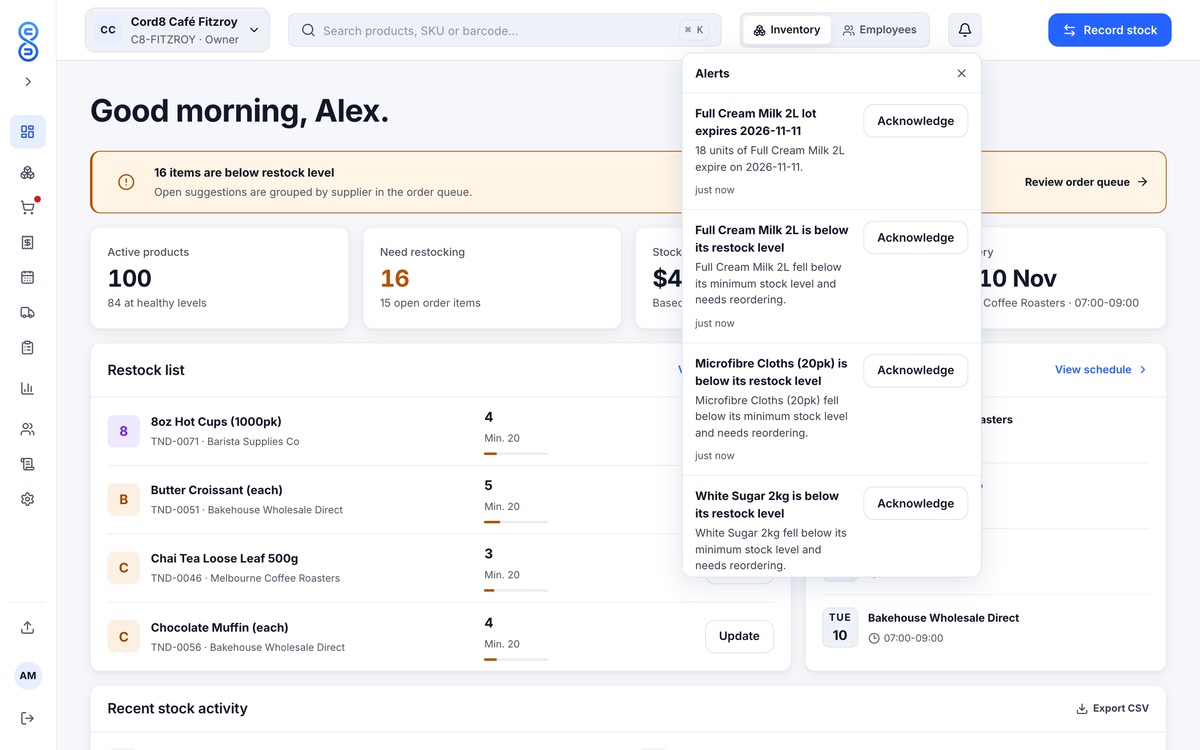
Put the receiving date where the eye falls first, rather than on the back of the box. Staff who can read the date at a glance will use the right batch without being asked, and you will spend less time checking the fridge on a busy morning.
Set your alert window so you hear about a batch before it is due, not after it has gone.
How do you make first in, first out stick?
First in, first out only works when the stock is put where the next person will find it. Put new deliveries behind what is already there, pull the oldest tray forward at the start of each shift, and make it part of the opening routine rather than a rule that lives in one person's head.
A simple test: could a new team member find the oldest batch of your most-used product without asking? If not, move it to the front and show them where it is.
In the first week of any change, walk the fridges at the same time each day. You will spot the old batches hidden behind new ones, and you will see which product always ends up at the back. That product is usually the one to fix first.
Are you ordering to what sells?
Waste is often an ordering problem in disguise. If the same item goes in the bin every week, check whether you are buying it in a pack size that does not match how fast you use it. Suggested orders work best when they start from what you actually used, not from what you hoped to sell.
Read the transcript
Products below their restock level. A suggested order, grouped by supplier. Receive part of the delivery now. An alert shows a batch close to its expiry date.
Before you accept a suggestion, check it against last week's waste log. If a product is binned most weeks, order less next time, or put it on the specials board so it sells through.
Look at the most-wasted items over a month. If the same products come up every week, that points to the order quantity or the menu, not to careless staff. Fixing the order is usually quicker, and it sticks.
How often should you review the log?
Once a week is enough for most cafes. Sit down for a few minutes with whoever places the orders, look at the most-wasted items and the reasons beside them, then change one thing. Change one thing at a time, so you can see whether the waste moves. Changing five things at once tells you nothing.
Keep the review short enough that it actually happens. Ten minutes at the same time each week beats an hour once a quarter, because the log is only useful while the reasons are still fresh.
If you bake on site, the bakery inventory page covers batch dates in more detail. For the wider stock picture, see inventory software for independent shops and venues. For the count side of the same routine, read how to run a cafe stocktake.
Waste checklist
- Agree what counts as waste before you start.
- Give every write-off a short, fixed reason.
- Record a date on every batch when it arrives.
- Put new stock behind the old, and pull the oldest forward.
- Set alerts ahead of expiry, not on the day.
- Review the log once a week, and change one thing at a time.
Common questions
Should staff meals go in the waste log?
Yes, if they come out of your stock. Log them with a clear reason, such as staff meal, so the number means something. Whether a product can still be served or used past its date is a food safety question rather than a stock one. Check the official guidance at Food Standards Australia New Zealand or with your local council.
How long before a waste log shows a pattern?
A few weeks of consistent entries is usually enough to see a repeat. Keep the reasons the same, and the pattern shows up as the same product under the same reason. A log that is filled in only when someone remembers will not show anything useful. Ask whoever runs the close to check the log before they leave, so the day's waste is recorded while it is still fresh.
Does a waste log replace a stocktake?
No. The log records what left as waste. A stocktake records what is still on the shelf. Use the count to check the numbers and the log to explain the gaps.